Diagnostic guide
Roof Leak Diagnostic Guide for Yuma, AZ Homeowners
As of August 2026, most Yuma roof leaks trace back to one of four causes — worn or wind-loosened flashing, wind-lifted shingles or tiles, a clogged flat-roof drain, or general age-related wear — and a typical local repair call runs $1,100–$1,500. Use the checklist below to narrow down the cause before you call, or call (928) 597-9287 to get connected with a local roofing company now.
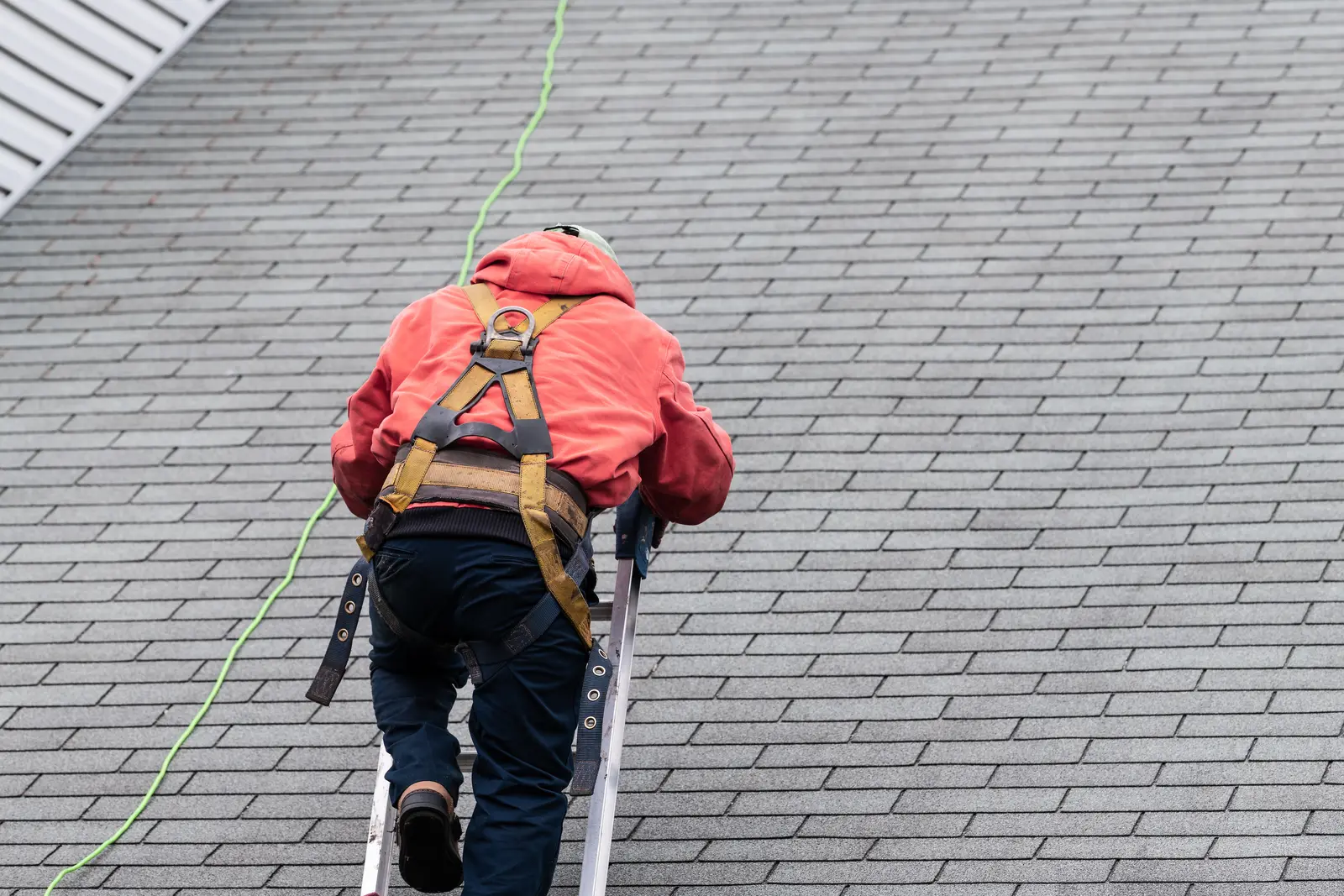
Why roofs leak in Yuma
Two very different forces cause most Yuma roof leaks. Year-round, the daily swing between scorching afternoon heat and cooler nights puts roofing materials through constant expansion and contraction, which gradually works flashing loose and accelerates shingle wear. During monsoon season (officially June 15 through September 30 in Arizona), sudden wind gusts and short, intense downpours add a second, faster-acting cause: wind uplift that loosens or removes roofing material, and heavy runoff that exposes any drainage weak point a roof already had. A roof that looked fine in May can develop a real leak after a single strong monsoon cell.
Self-diagnose a roof leak: a step-by-step checklist
Before you call, this sequence helps narrow down where the water is actually coming from — useful information for whoever ends up doing the repair, even if you don’t find the exact source yourself.
- Check the attic on a dry day. Before the next storm, look for water stains, wet or compressed insulation, dark mold spots, or visible daylight coming through the roof deck. This is the single most useful step for finding where water is actually entering.
- Trace the stain, not just the ceiling spot. Water often travels sideways along a rafter or the underside of the decking before dripping down, so the entry point on the roof is frequently not directly above the stain you see inside. Follow any visible water trail upward and outward from the stain.
- Inspect flashing points. From the ground or a securely placed ladder, look at flashing around chimneys, roof vents, skylights, and anywhere two roof planes meet — these junctions are the most common leak source on an otherwise intact roof.
- Look for wind-lifted or missing shingles and tiles. After any windy day or monsoon storm, scan the roof — especially ridges and edges — for shingles or tiles that look lifted, cracked, or are simply missing.
- Check flat-roof drains and scuppers. If your home has a flat or low-slope section, confirm drains and scuppers are clear of monsoon debris. Water sitting for more than about 48 hours after a storm signals a drainage problem, not normal runoff.
- Note when the leak shows up. Does it appear only during active rain, or does it show up hours or days later? Telling a roofing company this detail when you call helps them diagnose the cause faster once they’re on-site.
Why is my roof leaking after monsoon?
This is one of the most common questions Yuma homeowners search after a storm, and the honest answer is that monsoon damage is often invisible from the ground. Wind can lift a shingle or tile at the edge just enough to break its seal without removing it entirely, which means a roof can look completely intact after a storm and still be leaking. Flashing around chimneys and vents can flex and separate under wind pressure the same way. On flat or low-slope sections, ponding water that sits for more than about 48 hours after a storm is the more common culprit — not the rain itself, but debris blocking a drain or scupper. If a storm caused the damage, the Storm & Monsoon Damage guide covers the emergency steps, real storm-repair cost figures, and the insurance-claim process — including your actual filing deadline under Arizona law.
Signs you need a new roof, not just a repair
A leak doesn’t automatically mean a full replacement, but a few signs point that direction rather than toward a one-off repair:
- Multiple leak points, not just one isolated spot.
- Widespread granule loss or curling across many shingles, not a localized patch.
- A roof already near or past its expected lifespan for its material — see the material comparison guide for typical lifespans in Yuma’s climate.
- Soft spots or visible sagging in the decking, which usually means water has been getting in for a while, not just recently.
- More than one repair call in the past year or two — at some point, repeated patching costs more over time than a single replacement.
If any of these sound familiar, the Roof Replacement Cost guide has real Yuma pricing by material to help you plan.
What a Yuma roof leak repair typically costs
Typical figure based on Homeyou’s sample of 522 real Yuma roof-repair quotes collected in 2026 (YUM-010). Severity bands are a directional Arizona-wide benchmark (arizonaroofers.com) layered on top — treat the typical figure as the better anchor for an average call, and the bands as a guide to where a specific problem tends to land.
| Severity | Estimated cost range |
|---|---|
| Minor (flashing, ridge cap, a few shingles) | $200–$750 |
| Moderate (localized leak, small area) | $700–$1,500 |
| Major (valley leak, decking damage) | $1,500–$8,000 |
See the full Roof Repair Cost guide for the complete breakdown, including inspection pricing and a repair-vs-replace framework.
We work with roofing companies who report holding active ROC licensing and insurance — always verify directly at azroc.my.site.com before hiring.
Frequently Asked Questions
Why is my roof leaking after monsoon season in Yuma?
The most common cause is wind uplift at ridges, edges, and vents that loosens shingles or tiles or works flashing loose without necessarily tearing anything off outright — so the roof can look fine from the ground while still leaking. Flat and low-slope roofs can also leak after monsoon storms if a drain or scupper clogged with debris lets water pond for more than a couple of days. See the self-diagnosis checklist above to narrow down which applies to your roof.
How much does it cost to fix a roof leak in Yuma?
A typical Yuma roof leak repair runs $1,100–$1,500, based on real local repair quotes as of August 2026. A small, isolated fix like a flashing reseal or a few replaced shingles can run well under that; a major repair involving decking damage can run $1,500–$8,000. See the full Roof Repair Cost guide for the complete breakdown by severity.
Can I temporarily stop a roof leak myself?
For a contained leak, placing a bucket or towel underneath and moving nearby belongings away from the area is reasonable while you arrange a professional look. Getting on the roof yourself, especially during or right after a storm, isn’t worth the fall risk — leave temporary tarping and any roof-level work to a roofing company.
How do I know if I need a repair or a full roof replacement?
A single, localized leak on a roof that’s otherwise in reasonable shape is usually a repair. Multiple leak points, widespread granule loss or curling, a roof already near or past its expected lifespan, or more than one repair call in the past year or two all point toward replacement being the better long-term call. See the "signs you need a new roof" section above for the full list.
Get Your Roof Leak Diagnosed
Tell us what's going on and we'll connect you with a roofing company serving your area.